
Faces of engineering education
sprungmarken_marker_2434
5 questions for Nina Zimmer
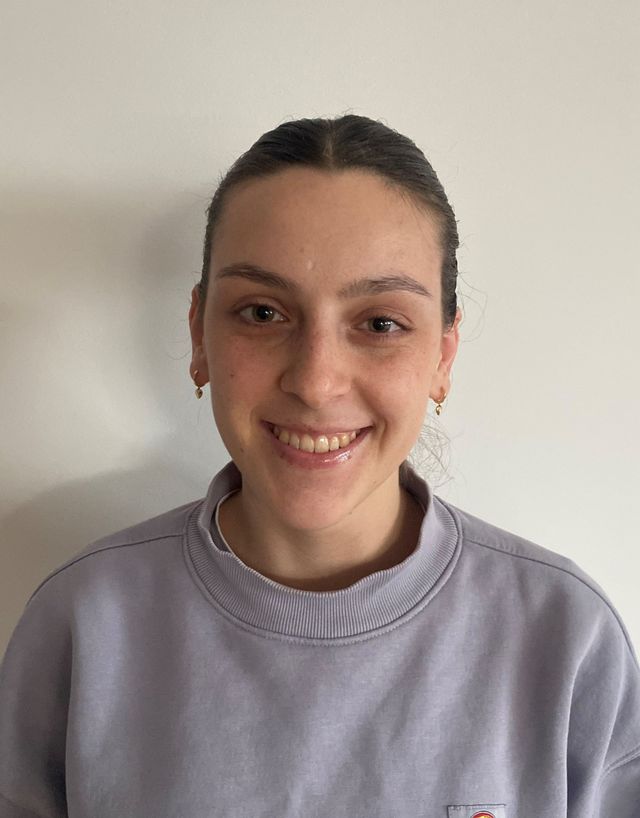
After dropping out of a teacher training course, Nina Zimmer opted for the broader field of education. The degree offers her numerous opportunities to specialize and opens up prospects for various professional fields in the education sector.
5 questions for Nina Zimmer
1. what exactly are you studying and why did you choose this course?
I am studying general education with a focus on vocational education. After dropping out of my teacher training course, I decided to study education because I was still interested in education and education as a whole is a very broad field. As the teacher training course is strongly geared towards the teaching profession, the education degree course was a course that offered me a wide range of opportunities for my own specialization, but also for a future career.
2. what content or modules have surprised or inspired you the most so far?
First of all, I was surprised by the rather large proportion of vocational education. At the beginning, this was actually not the area in which I wanted to specialize, but now it is a very exciting and diverse subject for me.
I also think it makes a lot of sense to keep an eye on people's possible future careers, such as training and further education, and to encourage lifelong learning, regardless of the area of pedagogy in which you specialize.
3. You work as a student assistant in the InnoVET PLUS project. What tasks do you take on there and does your work help you in your studies?
In the InnoVET project, I come into close contact with research practice. I am heavily involved in various work processes and have the opportunity to accompany many different aspects of project implementation.
The work helps me in particular to better understand the framework conditions of research projects. The practical approach also makes it easier for me to understand the qualitative and quantitative research methods.
4. to what extent has working on the InnoVET project shaped your idea of a future career in education?
During my Bachelor's degree, I was already thinking about choosing a Master's degree with a high research component. I am therefore very grateful for the opportunity to deepen my knowledge in this area as part of the InnoVET project. The work in the InnoVET project has definitely strengthened my interest.
5. what talent or strength did you first discover about yourself during your studies?
During the course of my studies, I developed my ability to be flexible. The decisive factor for me was mainly my change of degree course. As I always found change difficult, this step was a big challenge for me.
Looking back, however, it has shown me that change can be necessary and ultimately very worthwhile. Today, I find it much easier to adapt to new situations and remain flexible overall.
5 questions for Martin Schwarz
Find out what challenges he faces as part of the InnoVET PLUS joint project and what tips he gives students on how to write their own texts.
1. what moment in your life sparked your passion for vocational and company education?
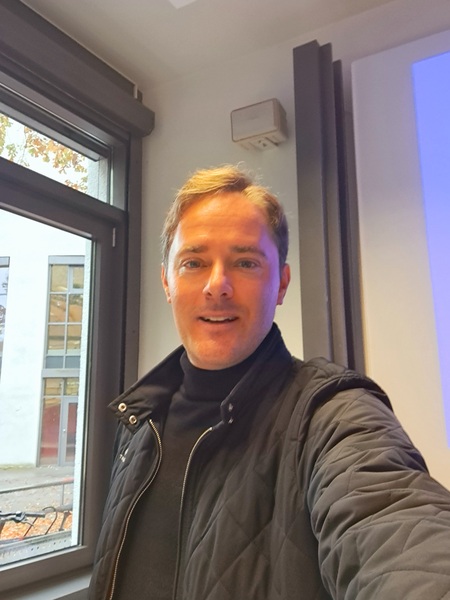
for Vocational Education & Project Manager InnoVET PLUS
Looking back, the foundation stone was laid in the context of or at the end of my dual vocational training at the time. It quickly became clear to me that I didn't want to work in a specialist area. I was much more interested in in-company training and further education. So I initially became a company trainer and completed the training of trainers - the AdA certificate for short - as my first rudimentary vocational training qualification through the Chamber of Industry and Commerce. But it didn't stop there...
Later, or rather quite soon, I left the company and studied vocational and company pedagogy, at that time still as a diploma course. This was followed by professional positions as a personnel developer and project manager in a consultancy firm for in-company training. I completed my doctorate as part of the research training group 'Change processes in industry and service professions' at Martin Luther University Halle-Wittenberg. This is where my interests in occupational research, the professionalization of pedagogical forms of action, in particular counselling and continuing education research, were awakened. I almost went to the BIBB (Federal Institute for Vocational Education and Training), where I had already signed up, but then almost at the same time I had the opportunity to take up an academic council position at my home university, the RPTU Kaiserslautern-Landau. I had later completed my habilitation there with a research paper on continuing vocational training, which in a way closed the circle. At the RPTU, I then added the topics of school pedagogy, teacher professionalism and school development, which address the school as a place of learning in vocational education.
I also consider my time in Saarbrücken to be a very significant moment. Here I was able to spend three years helping to set up a university and develop vocational education. I was on leave from RPTU for this time. The decisive factor here was that the students were the same age or older than me and, as already established teachers - in schools for healthcare professions - they needed post-qualification in vocational education. On the one hand, it was important to do justice to adult learning and, on the other, to bring the standards of social and educational science and vocational education closer to the students and create a professional working alliance.
Viktoria Bergmann: Research, practice, digital education
Viktoria Bergmann brings her passion for education and e-learning, research & practice transfer and her everyday survival tips directly to Lernfabriken@BeruflicheBildung. She designs empirical studies, develops didactic concepts and ensures that scientific findings are immediately put into practice.

Viktoria Bergmann, research assistant,
Project collaborator in the InnoVET PLUS project & doctoral student
5 questions for Viktoria Bergmann
What did you study and what originally led you to this?
I studied educational science and focused on eEducation and lifelong learning in my Master's degree. In my subsequent time at an organizational consultancy, I was repeatedly confronted with the design of human-machine interfaces - in other words, with learning processes wherever technological systems and human competence come together. Since then, I have been fascinated by how profoundly digital and technological change is transforming our working world and what pedagogical responses are needed. It was precisely this combination of technological progress, human learning processes and pedagogical issues that ultimately led me to vocational training.
What does the InnoVET Plus project Lernfabriken@BeruflicheBildung mean to you personally, and what specific tasks are you taking on as part of this project?
For me, our current InnoVET Plus project is a unique experimental space in which research and practice come together directly. I find it particularly important that we not only think about ideas and models for innovations in vocational education and training, but also implement and test them together with a wide variety of stakeholders. In this way, scientific ideas find their way into practice without delay.
In the project, I work both in scientific support and in terms of content and operations: I design and analyze empirical surveys, support the development of didactic concepts for learning factories and evaluate the project over the entire period. It is important to me that science, teaching and practice remain in constant exchange and that all expertise and perspectives are equally included - so that findings from practice ultimately flow back into research and can be further developed there.
What does a typical day as a PhD student + project team member look like - do you have a secret survival tip for the time juggling act?
A typical day for me is a colorful mix of coordination within the project, completing research tasks, writing papers for conferences and publications and teaching students at our institute. Between meetings, emails and concept papers, I try to keep concentrated phases free for my doctorate - which sometimes works better and sometimes worse. My survival tip: real-time prioritization. When the requests and tasks come in faster than your thoughts, it helps to stop for a moment and ask yourself: "What really needs to be done today?" Because honestly, not everything has to be done today. Some things can wait until tomorrow. Or next week.
What advice would you give to students who want to try out research or project work now?
I would advise students to use their time at university to try out everything that interests them and find out what suits them. It's great to have this freedom. At the same time, we lecturers are always very happy when students approach us and ask about opportunities to get involved. After all, you don't have to be an expert to get started. Openness and the desire to learn new things are much more important. And trying things out gives you the freedom to discover what excites you - and what perhaps not so much. This is exactly what the study period is for.
Is there a hobby or passion that you pursue outside of research that inspires you in your work?
I have to admit that free time in my life is limited. That's why I don't so much have one big hobby as many small interests that change depending on the season and mood - a dynamic hobby portfolio, so to speak. For me, anything that has to do with being together is particularly inspiring: This could be a visit to the playground with the family or an evening at the theater with a friend. Because the best ideas often come from sharing with others.
Imparting knowledge, shaping the future - spotlight on Benjamin Keßler
In our interview series "5questions for ...", we are once again putting a special student in the spotlight: BenjaminKeßler, B.Sc. student of Engineering Education and passionate mentor for his fellow students.

Benjamin Keßler, student in Engineering Education
B.Sc. student and mentor
5 questions for Benjamin Keßler
Why engineering education?
"My motivation is to support young people and teach them something."
Benjamin emphasizes that he is enthusiastic about the diversity of the course - both because of the interdisciplinary studies in three faculties and the wide range of career prospects. He is particularly motivated by accompanying young people and imparting knowledge to them.
How he became a mentor - and why it is important to him
"... it helps to have someone [...] who supports you."
Benjamin emphasizes that mentoring is anchored as a seminar in his studies and is particularly important to him because he enjoys supporting others. Especially at the beginning of his studies, it is valuable to have someone with experience at your side to provide guidance and make it easier to get started.
What motivates him day after day
"Basically, I'm driven by the vision of the future, what I'm going to do one day."
Benjamin explains that his part-time job as a private tutor also motivates him because he realizes how much he enjoys imparting knowledge. He is also driven by looking to the future and the idea of supporting students on their path and helping them get off to a successful start to their studies.
His view of the future
Benjamin is optimistic about the future: in five years' time, he sees himself at the end of his traineeship and at the start of his career as a vocational school teacher.
How he switches off after an intensive day of study
To balance things out, Benjamin either consciously takes time for himself and listens to music or spends time with friends - both give him new energy.
Curious to find out more? Then take a look at our faces of vocational education and discover more interviews.
5 questions for Dr. Daniela Reimann
Our interview series "5 Questions To" is entering the next round!
This time we introduce you to Dr. Daniela Reimann - one of our dedicated academic staff members who is passionate about combining teaching, research and creative educational skills.

Dr. Daniela Reimann
Research Associate
5 questions for Dr. Daniela Reimann
What excites you most about your work in the Vocational Education team?
So far, I have enjoyed working on various research projects at national and international level, which have focused on investigating digital media in design-oriented teaching and learning processes. The combination of (media) theory and design practice is particularly exciting.
I also enjoy working with groups of students from different disciplines when it comes to how they use digital media and reflect on it for school or professional practice.
You also give your own courses - what is particularly important to you when dealing with students?
The students come to us with very different biographies, cultural backgrounds and interests. In the seminars, they should also be encouraged to think outside the box and test media technologies in a differentiated way in order to develop an understanding of technology, use its effects in a targeted manner and be able to assess side effects. To do this, they need open learning situations and places of learning where design-oriented experimentation and reflection can be encouraged.
What concerns or questions can students typically turn to you with?
They can contact me with questions about the range of courses/curriculum planning for engineering degree courses, but also with questions about possible topics for final theses in the field of digital media.
What advice would you give new students to get off to a good start and successfully master their first semester?
First of all, students should settle into their studies and not put themselves under pressure with performance requirements. Especially at the beginning of their studies, it makes sense to make contacts and explore the city and surrounding area of Karlsruhe. Studying is not only a qualification phase, but also a phase of self-reflection and self-education, after school with increasing independence and detachment from the parental home.
When you think about the institute - what makes it special for you and why is it worth studying here?
The atmosphere is informal and you know the students, which can be a great advantage, especially at the beginning, when you are settling into your studies.
5 questions for our study ambassador Yuhang Chen
How does a student experience everyday life at our university? What motivates them to combine study and work? And what personal highlight has had a particular impact on him so far?
In a short interview, our student employee and student ambassador talks about his experiences, his motivation and his tips for future students:

Yuhang Chen, student in Engineering Education for Engineers
and Engineers (M.Ed.) & study ambassador
5 questions for Yuhang Chen:
1. what motivated you to start your studies at KIT - and what do you particularly like about it?
I always wanted to develop my scientific knowledge "holistically". After my bachelor's degree in engineering, I therefore wanted to choose a master's program with a stronger focus on social sciences. KIT's engineering education program offers exactly this opportunity: the program combines my previous knowledge with new perspectives - I particularly like that. Karlsruhe is also a compact, green city, which I really like.
2. what does a typical day look like for you as a student assistant - and how does this fit in with your studies?
I work rather flexibly as a student assistant. My working hours are not fixed, I'm there when the institute needs support. I usually work from home - for example, I research materials, help prepare events for new students or answer their questions directly on site.
3. what does being a student ambassador mean to you and why did you decide to do it?
I see the role of student ambassador as a great opportunity to raise awareness of our degree programs. Many pupils who waver between "I want to be an engineer" and "I want to be a teacher" don't even know beforehand that our degree courses offer an ideal combination of both. Through my work as a student ambassador, I can get in touch with them directly, introduce them to our subject and open up new perspectives for them.
4. what tips would you give to prospective students who are still unsure about what to study or where to start?
I would say: don't be afraid to try out different paths. It's completely normal to be unsure at the beginning. The important thing is to find out what really interests you and what suits you. Talk to students, attend information events and gather real impressions. Sometimes you only discover which degree program is really the right one when you're out and about - and that's also part of the learning process.
5. when you think back to your time at university so far - what has been your highlight or a moment that you particularly remember?
My highlight so far was my school internship. It was a real challenge to give lessons myself, but at the same time a valuable experience. I not only learned a lot about pupils, but also about pedagogy - and about myself.
Farewell and new beginnings in the Vocational Education team - 5 questions for Vanessa Greber
After more than 20 years of commitment, we are saying goodbye to Irina Werth, who was the heart of our administration at the Chair of Vocational Education. With her organizational talent, her warmth and her commitment, Irina has enriched our team both professionally and personally. We thank her from the bottom of our hearts for the many years of support and cooperation and wish her a fulfilled, happy retirement full of wonderful moments and new freedoms.

Vanessa Greber - New team assistant
for administration and study organizationn
At the same time, we are delighted to welcome to our team as of October 15, 2025. As Team Assistant for Administration and Student Organization, she brings fresh energy and drive to our everyday university life.
5 questions for Vanessa Greber
What are your main tasks in the team?
I support the Vocational Education team in all organizational processes - from student support to the coordination of internal processes. I take care of everything so that the team can focus on the important tasks.
What do you particularly like about your new role?
I particularly like the fact that no two days are the same and that I get a good overview of the diverse processes involved in everyday university life and have contact with both the team and the students.
What experience do you bring with you?
With over 10 years of professional experience, I have in-depth knowledge of office and administrative tasks, am IT-savvy and have always continued to develop my skills.
What do you like to do in your free time?
In my free time, I like to bake, try out creative projects and am interested in sport - both actively and as a spectator.
Do you have a motto or guiding principle for your work?
A smile unites - and makes work easier.
We warmly welcome Vanessa and look forward to working together - and once again a big thank you to Irina for her many years of valuable support!